When and How to Harvest Chives So the Plant Keeps Growing

2025-07-02
When and How to Harvest Chives So the Plant Keeps Growing

Chive plants are loved for their bright, oniony flavor and pinkish-purple edible flowers that make colorful salad toppers and garnishes. Growing this culinary herb is simple, but knowing how to harvest chives correctly will help keep your plants productive and healthy for many years to come. Use the harvesting tips in this guide to boost the growth of your chive plants and enjoy the freshest-tasting chives for your favorite recipes.

When to Harvest Chives

Chives are easygoing, edible plants that can be harvested throughout the season as cut-and-come-again herbs, or they can be gathered in larger quantities for freezing or drying.

Chive plants that are grown from seed are usually ready to harvest about 60 days after planting or when plants are about 6 inches tall. But if you’re in a rush, you can also grow chives from nursery grown plants and start harvesting fresh chives about 30 days after transplanting.

Small quantities of chive leaves can be harvested as needed from spring through fall. If you live in a warm area or grow chives indoors, you can harvest chives in winter too. But in order to get your hands on chive flowers, you’ll need to wait for plants to bloom and pick the flowers as soon as they appear in late spring or early summer.

Larger harvests of chives can be taken throughout the year as well, but it’s best to wait a few weeks in between harvests to give your plants some time to recover. First year chive plants can be harvested 3 to 4 times a year, but older and more established plants can be harvested about once
a month. Many growers take a large harvest of chives immediately after the plants flower and again in fall before a hard frost damages tender chive leaves.

How to Harvest Chives

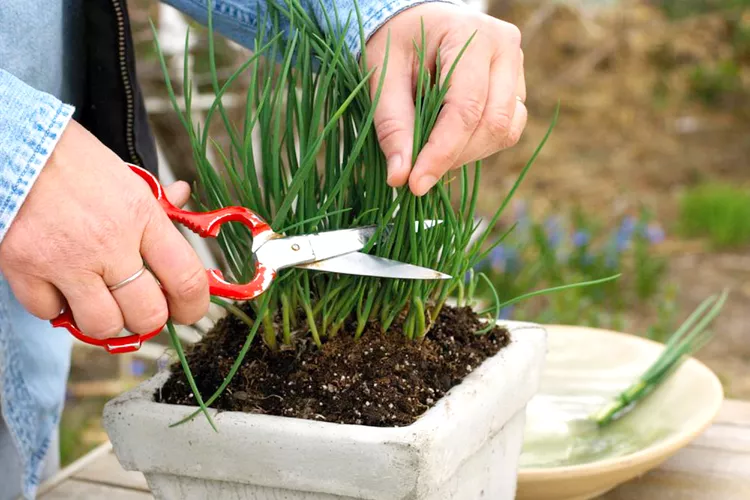
If you just need a few chives for cooking, harvest the older, outer leaves around the exterior of the plant using your fingertips or a pair of scissors. Chives will grow better and look tidier in herb gardens if you clip leaves off about 1 to 2 inches above the soil line. Chive flowers can be harvested in the same way by cutting the woody flower stalks off at the soil line.

Larger quantities of chives can also be harvested by hand or with scissors or garden pruners. To start, gather the leaves you need in one hand and then cut them off 1 to 2 inches above the base of the plant. If you don’t have scissors handy, you can also twist chive leaves off the plant with a flick of your wrist, but make sure you don’t accidentally pull the plant from the ground.

Regularly harvesting chive plants from your garden will reduce yellow leaves and stimulate new growth, but don’t overdo it. And remember, chive leaves don’t last long in the fridge, so it’s best to harvest only what you plan to use right away.

For easy harvesting, loosely fasten a rubber band around the base of your chives before cutting to create a tidy bundle of chives.

How to Store Chives

After harvesting chives, make sure you store them properly so they last as long as possible. To avoid wilted leaves, bring fresh chives indoors immediately after harvesting. Then pick out any yellow or wilted stems and use the remaining leaves as soon as you can.

If you harvest more leaves than you need for cooking, store extra chives in the fridge in a glass filled with about one inch of water and refresh the water daily. You can also wrap chive leaves in a damp paper towel and store them in a re-sealable plastic bag in your crisper drawer. When properly stored, chives should stay fresh for about 7 to 14 days.

If you’d like to store your chive harvest even longer, you can dehydrate fresh chives using a food dehydrator and store leaves in an airtight container in your pantry. Or you can wrap chive leaves tightly in an airtight baggie and store them whole in the freezer or chop them into bits and freeze them in ice cube trays with oil or water.
Frequently Asked Questions

  • Is it OK to let chives flower?

    Letting chives flower doesn’t harm the plant, although chives won’t produce as many leaves when they’re blooming. If you want to keep these edible plants as productive as possible, remove chive flowers and use them as a garnish. Or you can let chives bloom to attract pollinators and beneficial insects to your herb gardens and eventually harvest chive seeds.

  • What can I do with too many chives?

    You can preserve a bumper crop of chives by freezing or drying them. However, chives are versatile herbs that also taste delicious in dishes as varied as chive pesto, lemon chive butter, and chive pancakes.

  • How do you extract chive seeds?

    Once the flowers have faded, clip the flower heads off into perforated paper bags and allow them to dry in a warm spot with good air flow for several weeks. Then shake the seeds free from the flower heads and store them in a cool, dry location until you’re ready to plant.

Related Article

How to Grow Persimmon Trees from Seed

How to Grow Persimmon Trees from Seed

Use these easy step-by-step instructions to grow a persimmon tree from a seed.
10 Best Blueberry Companion Plants That Thrive in Acidic Soil

10 Best Blueberry Companion Plants That Thrive in Acidic Soil

Use these blueberry companion plants to boost your berry harvest and naturally control blueberry pests.
How and When to Harvest Radishes at Their Peak

How and When to Harvest Radishes at Their Peak

These easy-to-follow tips will help you figure out how and when to harvest radishes for the best flavor and size. Plus, get troubleshooting advice if your radish roots aren't developing properly.
10 Best Vegetables for Raised Beds and Small Spaces

10 Best Vegetables for Raised Beds and Small Spaces

These easy-to-grow crops are the perfect vegetables for raised beds because they love loose, well-draining soil.
10 Best Broccoli Companion Plants

10 Best Broccoli Companion Plants

Using broccoli companion plants, including some vegetables, herbs, and flowers, can help repel pests and improve the quality of your harvest.
4 Expert Tips for When and How to Cut Tulips in Your Garden

4 Expert Tips for When and How to Cut Tulips in Your Garden

Find out when and how to cut tulips and the best way to care for them so they last as long as possible.
Best Tropical Flowers for Your Patio

Best Tropical Flowers for Your Patio

Outdoor tropical flowering plants can help add drama to your patio. You can leave them outdoors and treat them like annuals, or keep them over winter as houseplants.
6 Long-Blooming Perennials That Keep the Color Alive

6 Long-Blooming Perennials That Keep the Color Alive

Say hello to some of our favorite perennials—three for sun and three for shade—that flaunt their color for weeks (or even months).
Is Coleus a Perennial or Annual? Here's How to Grow It Both Ways

Is Coleus a Perennial or Annual? Here's How to Grow It Both Ways

Is coleus a perennial that comes back every year? That depends on where you live and how you care for it. Use these tips to enjoy coleus as a colorful perennial or annual plant.
How to Plant and Grow Oxalis

How to Plant and Grow Oxalis

Oxalis is a diverse genus comprising hundreds of species, including annuals, perennials, and tropical plants.
Are Zinnias Perennials or Annuals? And How to Grow Them

Are Zinnias Perennials or Annuals? And How to Grow Them

You may be hoping this favorite garden flower will come back next year. But are zinnias perennials? Find out how to enjoy these plants from year to year.
How to Plant and Grow Agapanthus

How to Plant and Grow Agapanthus

Agapanthus is a low-maintenance perennial and landscape staple that produces clusters of trumpet-shaped flowers.
Light Up a Shady Spot with This Easy-Care Summer Shade Garden Plan

Light Up a Shady Spot with This Easy-Care Summer Shade Garden Plan

Enjoy this easy-care, summer-blooming shade garden plan that combines hydrangeas, roses, lilacs, and more.
This Bold Shade Garden Plan Brims with Color and Texture

This Bold Shade Garden Plan Brims with Color and Texture

This bold shade garden plan contains gorgeous foliage and flowers that don't need a lot of sun.
This Drought-Tolerant Garden Plan Saves Water and Time

This Drought-Tolerant Garden Plan Saves Water and Time

This drought-tolerant garden plan won't require as much watering as thirstier plants. Use this design to create a beautiful garden that will thrive even through dry spells.
An Island Flower Bed That Looks Gorgeous from Every Angle

An Island Flower Bed That Looks Gorgeous from Every Angle

Add excitement to your landscape with a bed of low-maintenance perennials around a flowering tree.
A French Kitchen Garden Plan Filled with Fresh Flavors and Scents

A French Kitchen Garden Plan Filled with Fresh Flavors and Scents

Our French kitchen garden plan filled with fresh flavors and scents is inspired by old-world monastery gardens.
The Top Deck Colors for Summer 2024, According to Experts

The Top Deck Colors for Summer 2024, According to Experts

Freshen up your outdoor space with these trending deck colors, from cool-toned paints to rich, warm stains.
12 Chicken Coop Ideas for Your Backyard Hens

12 Chicken Coop Ideas for Your Backyard Hens

These chicken coop ideas will help keep your flock safely contained while serving as an attractive addition to your landscape.
Everything You Need to Know About Landscape Edging

Everything You Need to Know About Landscape Edging

Landscape edging supplies a crisp edge between different areas of your yard. Use this guide to select the best edging for your garden design.