How to Prune Grape Vines to Get the Best Harvest

2025-06-20
How to Prune Grape Vines to Get the Best Harvest

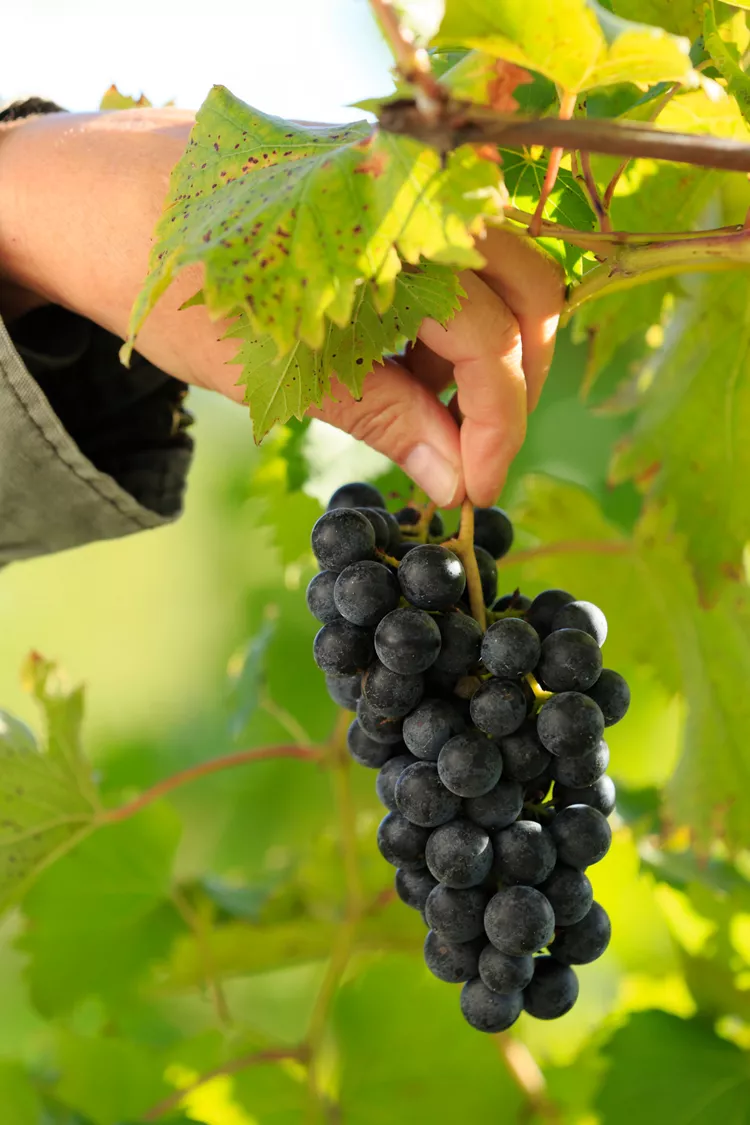
The botanical gift that keeps on giving, grape vines provide you with fresh, delicious fruit year after year. The secret to producing the most plentiful harvests: pruning. Skipping out on this step can prevent your vines from getting all the sunlight they need, which inhibits growth. If you're new to pruning grape vines, don't stress—it's a simple process you only have to tackle on an annual basis. Becoming familiar with the anatomy of a vine is the first step. Then, all you need is your trellis, a cutting tool, and your best gardening judgment. The benefits (i.e. all the homemade wine, jams, juice, etc.) are definitely worth it.

Grape Vine Terms to Know

Before you touch any of your grape vines, make sure you know the essential terminology. Here are the parts of the plant to add to your gardening vocabulary:

  • Trunk: Old wood that grows vertically
  • Cordon: Old wood that grows horizontally on the trellis
  • Arms: Old wood coming off the cordon
  • Shoots: Green shoots that began growing in the current season
  • Canes: ~1 year-old wood that was a green shoot in the previous year, also where buds grow
  • Buds: Fruitful shoots that grow on canes

Understanding these terms makes it easier to break down the grape vine pruning process. Check out a few diagrams or photos online, such as the ones from the California Table Grape Commission.

Why You Need to Prune Grape Vines

To put it simply, pruning grape vines allows the plants to get enough sun. If you let your vines grow freely, shoots and clusters will overwhelm the plant and create barriers that block the light. It's also important to get rid of older, less healthy canes and old wood to promote new growth and avoid diseases.

"We're trying to manage where the sun is and where the fruit is," says Randall Vos, commercial fruit crops field specialist at Iowa State University. "[Without pruning], the clusters aren't going to set as many berries as you'd want because there are too many, and it's going to be a big shady mess."

A grape vine is a perennial plant, meaning it comes back each year. Not cutting back the shoots to limit the amount of fruit a vine produces may give you a higher yield in your first year, but it hurts your plant in the long run, Vos says.

Tips for Pruning Grapes

Pruning should be done each year during the winter or dormant season, depending on where you live (generally between January through March). Fall is too early—even if plants look like they're dormant, they're still producing sugar and nutrients, Vos explains. To prepare for pruning, use the summer season to teach your vines to grow vertically on your training system (a trellis, arbor, or posts). To cut your canes, invest in a pair of handheld pruners or loppers. Stay away from saws (especially chainsaws).

The buds on a grape vine produce a lot of fruit, but you don't need to keep all of them to have a full crop. Each dormant season when it's time to prune, choose a few of the strongest canes to leave and cut back the rest. "Usually people choose 10 to 12 good canes and shorten them to four or five buds each," Vos explains.

When deciding on the canes to keep, look for smooth bark and a dark color. The darker the color, the more cold-hardy the stem tends to be. Longer canes give you bigger clusters, so if you're growing table grapes and want that standard, store-bought size, you may consider pruning off the shorter ones.

Grape Vine Pruning Mistakes to Avoid

The most common mistake home growers make? They don't clear out enough canes, Vos says. If the thought of aggressively chopping back your grape vines causes you slight panic, just remember pruning means prosperity. It might seem contradictory, but the more growth you remove, the healthier your remaining vines will be.

"If you leave 40 to 50 buds on an average-size grape vine when it's full grown, you're doing pretty good," Vos says. "You can get complicated with pruning formulas, but if you have a vigorous vine that's four to five years old, 40 to 50 buds should be a guesstimation to make it work out."

Another misconception to watch out for involves the size of the cane: Remember that bigger isn't better. Moderate-diameter canes yield the best results. Think slightly thicker than your thumb, and definitely not any smaller than a pencil.
Related Article

How to Grow Persimmon Trees from Seed

How to Grow Persimmon Trees from Seed

Use these easy step-by-step instructions to grow a persimmon tree from a seed.
10 Best Blueberry Companion Plants That Thrive in Acidic Soil

10 Best Blueberry Companion Plants That Thrive in Acidic Soil

Use these blueberry companion plants to boost your berry harvest and naturally control blueberry pests.
How and When to Harvest Radishes at Their Peak

How and When to Harvest Radishes at Their Peak

These easy-to-follow tips will help you figure out how and when to harvest radishes for the best flavor and size. Plus, get troubleshooting advice if your radish roots aren't developing properly.
10 Best Vegetables for Raised Beds and Small Spaces

10 Best Vegetables for Raised Beds and Small Spaces

These easy-to-grow crops are the perfect vegetables for raised beds because they love loose, well-draining soil.
10 Best Broccoli Companion Plants

10 Best Broccoli Companion Plants

Using broccoli companion plants, including some vegetables, herbs, and flowers, can help repel pests and improve the quality of your harvest.
4 Expert Tips for When and How to Cut Tulips in Your Garden

4 Expert Tips for When and How to Cut Tulips in Your Garden

Find out when and how to cut tulips and the best way to care for them so they last as long as possible.
Best Tropical Flowers for Your Patio

Best Tropical Flowers for Your Patio

Outdoor tropical flowering plants can help add drama to your patio. You can leave them outdoors and treat them like annuals, or keep them over winter as houseplants.
6 Long-Blooming Perennials That Keep the Color Alive

6 Long-Blooming Perennials That Keep the Color Alive

Say hello to some of our favorite perennials—three for sun and three for shade—that flaunt their color for weeks (or even months).
Is Coleus a Perennial or Annual? Here's How to Grow It Both Ways

Is Coleus a Perennial or Annual? Here's How to Grow It Both Ways

Is coleus a perennial that comes back every year? That depends on where you live and how you care for it. Use these tips to enjoy coleus as a colorful perennial or annual plant.
How to Plant and Grow Oxalis

How to Plant and Grow Oxalis

Oxalis is a diverse genus comprising hundreds of species, including annuals, perennials, and tropical plants.
Are Zinnias Perennials or Annuals? And How to Grow Them

Are Zinnias Perennials or Annuals? And How to Grow Them

You may be hoping this favorite garden flower will come back next year. But are zinnias perennials? Find out how to enjoy these plants from year to year.
How to Plant and Grow Agapanthus

How to Plant and Grow Agapanthus

Agapanthus is a low-maintenance perennial and landscape staple that produces clusters of trumpet-shaped flowers.
Light Up a Shady Spot with This Easy-Care Summer Shade Garden Plan

Light Up a Shady Spot with This Easy-Care Summer Shade Garden Plan

Enjoy this easy-care, summer-blooming shade garden plan that combines hydrangeas, roses, lilacs, and more.
This Bold Shade Garden Plan Brims with Color and Texture

This Bold Shade Garden Plan Brims with Color and Texture

This bold shade garden plan contains gorgeous foliage and flowers that don't need a lot of sun.
This Drought-Tolerant Garden Plan Saves Water and Time

This Drought-Tolerant Garden Plan Saves Water and Time

This drought-tolerant garden plan won't require as much watering as thirstier plants. Use this design to create a beautiful garden that will thrive even through dry spells.
An Island Flower Bed That Looks Gorgeous from Every Angle

An Island Flower Bed That Looks Gorgeous from Every Angle

Add excitement to your landscape with a bed of low-maintenance perennials around a flowering tree.
A French Kitchen Garden Plan Filled with Fresh Flavors and Scents

A French Kitchen Garden Plan Filled with Fresh Flavors and Scents

Our French kitchen garden plan filled with fresh flavors and scents is inspired by old-world monastery gardens.
The Top Deck Colors for Summer 2024, According to Experts

The Top Deck Colors for Summer 2024, According to Experts

Freshen up your outdoor space with these trending deck colors, from cool-toned paints to rich, warm stains.
12 Chicken Coop Ideas for Your Backyard Hens

12 Chicken Coop Ideas for Your Backyard Hens

These chicken coop ideas will help keep your flock safely contained while serving as an attractive addition to your landscape.
Everything You Need to Know About Landscape Edging

Everything You Need to Know About Landscape Edging

Landscape edging supplies a crisp edge between different areas of your yard. Use this guide to select the best edging for your garden design.