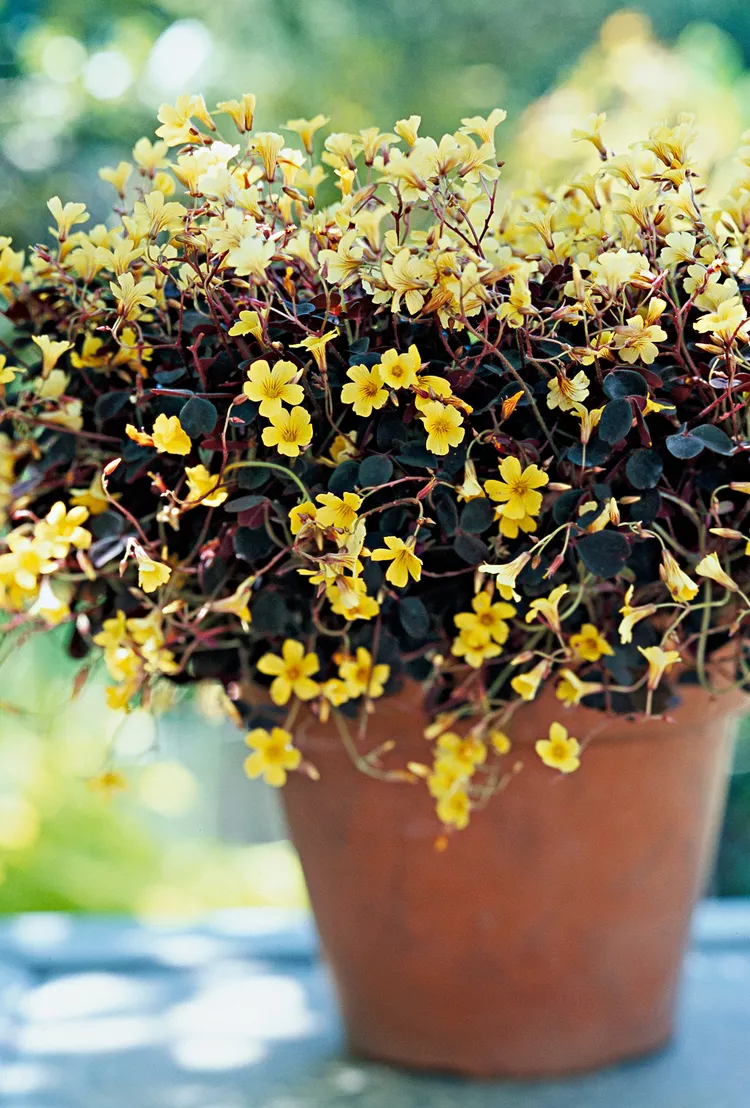
The diverse oxalis genus comprises hundreds of species. There's a wide range of annuals, perennials, and even tropical types of oxalis. Many oxalis are bulb-forming plants, while others form vigorous spreading plants that can create dense colonies.
While many oxalis species have beautiful blossoms, these plants are most commonly grown for foliage. You can often find them in florist shops around St. Patrick's Day because their leaves resemble shamrocks and are often regarded as a sign of luck. Their leaves come in shades of purple, burgundy, pink, green, and silvery gray.
The plants bloom with small five-petal blossoms with intricate details on the inner petals. These blossoms often begin as tubular flowers that twist open to show off dainty stripes and dark-color throats. They can be found in shades of pink and white, while other species feature yellow and orange blossoms. There are species like Oxalis versicolor with flowers resembling peppermint candy: mostly white with an edge of red on the backside, creating a swirled look as the petals twist open.
Many oxalis plants are toxic to humans and animals. Keep them away from areas where children and pets play.
Oxalis Overview
| Genus Name | Oxalis |
| Common Name | Oxalis |
| Plant Type | Annual, Bulb, Houseplant, Perennial |
| Light | Part Sun, Shade, Sun |
| Height | 6 to 12 inches |
| Width | 6 to 12 inches |
| Flower Color | Orange, Pink, White, Yellow |
| Foliage Color | Blue/Green, Chartreuse/Gold, Gray/Silver, Purple/Burgundy |
| Season Features | Fall Bloom, Spring Bloom, Summer Bloom, Winter Bloom |
| Special Features | Good for Containers, Low Maintenance |
| Zones | 10, 11, 5, 6, 7, 8, 9 |
| Propagation | Division, Seed, Stem Cuttings |
| Problem Solvers | Drought Tolerant, Groundcover |
Where to Plant Oxalis
Plant oxalis in moist, well-drained soil that is not wet. Most oxalis plants thrive in part sun to part shade areas, and some can handle full sun. Oxalis plants that spread by rhizomes are useful in the landscape for groundcover, while those that form bulbs are better suited for garden beds and borders.
Some oxalis species are attractive houseplants. Although needs vary by species, in general, oxalis are cool-season plants. Locate oxalis houseplants in an area without direct sun exposure or high heat.
Of the hundreds of oxalis species, some are invasive and some are not. Check with your local agricultural extension for information in your area before planting.
How and When to Plant Oxalis
Spring is the best time to plant oxalis. Loosen the soil and amend it with compost to provide excellent drainage for nursery plants or bulbs. If you are planting rhizomes or bulbs, plant them only 1.5 inches deep. If you are planting nursery-grown plants, dig a hole slightly larger than the nursery container. Remove the plant from the container and plant it at the same depth in the hole. Backfill, pressing down on the soil with your hands to remove air bubbles. When planting multiple plants, check the plant nursery tag for spacing recommendations.
Oxalis Care Tips
Growing conditions differ among the numerous species in this genus. One of the best ways to learn how to care for an oxalis is to research its origin for information on its natural habitat. Then you can understand its proper growing conditions. Some oxalis are alpine plants, woodland plants, or tropical plants, each with different needs.
Light
In general, oxalis are versatile in their sun requirements. Sun exposure varies depending on the species. Some species, such as woodland plants, prefer shaded garden settings.
Soil and Water
All oxalis plants prefer well-drained soil. Many species of oxalis tend to be alpine plants; they won't tolerate any standing moisture. Woodland plants are generally more tolerant of typical garden conditions.
Many of the bulbous types of oxalis require a period of dormancy. The time of year they become dormant may vary from species to species, but summer is most often the dormant period. During this period of dormancy, it's essential to withhold water to encourage dormancy and prevent the bulbs from rotting.
Temperature and Humidity
Tropical species aren't hardy; they are accustomed to warmer climates and fare better in the summer months. Alpine plants are typically cool-growing plants. They don't care for warm summer weather and may have a summer dormancy period. Many other species are woodland plants that prefer shaded garden settings but tolerate typical garden conditions. Most oxalis plants grow in any humidity level, but some prefer high humidity in hot areas or indoors, so misting may be necessary.
Fertilizer
Fertilize oxalis plants monthly during the growing season (spring and sometimes fall). Do not fertilize during a period of dormancy or during the winter. Use a fertilizer with a 10-10-10 NPK ratio, either in slow-release granular form in the garden or as a liquid flower fertilizer, following the product instructions, for indoor plants.
Pruning
Oxalis plants don't require much attention to pruning. Cut back flower stalks after they bloom, all the way to the soil line. To prevent them from reseeding, cut back the flower stalks before they bloom.
Potting and Repotting
Oxalis is an excellent houseplant that likes to be rootbound. It prefers temperatures of 65°F to 75°F, which exist in most homes, but cannot tolerate warmer temperatures. Pot oxalis plants in good-quality potting soil and keep it moist, not wet.
In time, the plant may become crowded in its container. That won't bother the oxalis, but if you decide to repot, wait until the plant's dormant period to remove it, being careful not to damage any bulbs or rhizomes, and repot it in a pot with drain holes and only slightly larger than the one it left.
Pests and Problems
Like many plants, oxalis might attract aphids, mealybugs or whiteflies. These pests are a bigger problem with houseplants than with those in the garden. If needed, treat the plant with insecticidal soap or neem oil.
Some oxalis plants spread randomly and can take over a garden if they aren't contained in some way. Gardeners need to remain vigilant to control these aggressive spreaders.
How to Propagate Oxalis
Propagating oxalis doesn't require much effort; the plant is a prolific self-seeder. However, gardeners who want to propagate the plants can do so by division or seed.
Division: The plant's dormant period (usually summer) is the best time to divide oxalis plants. Lift the plant from the ground using a shovel or trowel. Brush away some of the soil and use your hands to gently separate the rhizomes or bulbs, being careful not to damage them. Replant the divisions immediately and water.
Seed: The seeds of most oxalis plants germinate quickly, usually in 7–14 days. In early spring, prepare a bed or container with well-draining soil and space the seeds about an inch apart. Cover them with a thin 1/8 to 1/4 inch of soil and water them. After they germinate, thin the seedlings to the recommended spacing for the species. If you are starting the seeds indoors, cover the container with a plastic bag and put it in a brightly lit area. Remove the bag when you see growth.
Types of Oxalis
With more than 550 species and cultivars of oxalis, there truly is a plant for any gardener's climate and interests.
'Iron Cross' Oxalis
Oxalis tetraphylla 'Iron Cross' offers leaves divided into four leaflets. Each center is decorated with a purple blotch that looks great against the pink flowers. It grows 10 inches tall and wide. Zones 8-9, though it also thrives as a houseplant.
Molten Lava Oxalis
Molton Lava Oxalis vulcanicola produces stunning orange-chartreuse foliage and decorative golden-yellow flowers all spring and summer. It grows 10 inches tall and wide. Zones 9-11, or try it as a houseplant.
'Purple' Oxalis
Oxalis regnellii var. triangularis bears rich burgundy-purple foliage and pink-blushed white flowers. It grows 12 inches tall and 8 inches wide. Zones 7-10. It's also a good variety to grow indoors.
Redwood Sorrel
This Oxalis oregana cultivar is native to areas of the Pacific Northwest. It bears white or pink flowers in spring and summer over silver-splashed foliage. This groundcover grows 8 inches tall. Zones 7-9
Silver Shamrock
Oxalis adenophylla is an easy-growing groundcover with silvery-blue foliage and pink flowers in late spring. It grows 5 inches tall and 6 inches wide in Zones 6-8.
Zinfandel Oxalis
The Zinfandel Oxalis vulcanicola variety bears rich purple foliage and golden-yellow flowers all summer. It grows 10 inches tall and 12 inches wide. Perennial in Zones 9-11, it grows as an annual or indoor plant in colder areas.